

Queensland real estate has had a public reminder recently of just how far listing photography can drift from reality. A Brisbane property was advertised showing a pool and water feature that simply don’t exist on the block. It isn’t an isolated case — digitally altered lawns, invented outdoor features, and edited-out flaws have become common enough that Australian regulators and industry bodies have started pushing back, with agents in Queensland and New South Wales explicitly required to ensure listing photos are accurate and not misleading.
Buyers have noticed. What was once treated as harmless enhancement is increasingly seen as a liability — for the agent, and for the seller, when a walk-through inspection doesn’t match the photos that got someone through the door in the first place.
The industry has been fixing the wrong thing
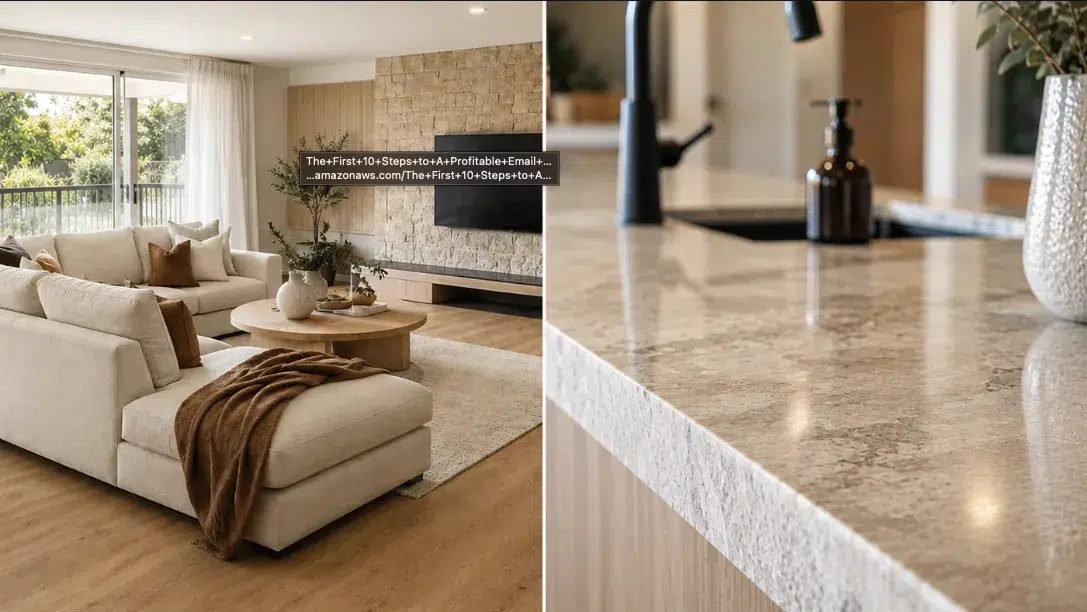
Real estate marketing has spent years perfecting the hero shot: styled furniture, corrected lighting, wide-angle lenses, and increasingly, AI-assisted editing that can lighten a room, remove clutter, or add a feature that was never there. All of it is aimed at the photograph. None of it addresses what happens the moment a buyer physically stands in the property.
That gap is where deals are lost. A styled image gets a buyer to the open home; it’s the property itself — how it smells, how surfaces feel underfoot, whether stone benchtops show etching under direct light, whether skirting boards and window tracks hold up under a slow walk-through — that determines whether they stay interested once they’re standing in it.
A photograph is not a standard
The uncomfortable truth for a market leaning harder on digital polish is that photo editing has raised buyer scepticism rather than buyer confidence. Every widely shared story of a phantom pool or an implausibly green lawn makes the next buyer a little more determined to trust their own eyes over the listing. A property that looks immaculate online and merely adequate in person now reads as a red flag rather than a pleasant surprise — it invites the exact scrutiny a seller doesn’t want during an inspection or a private viewing.
The properties that hold up are the ones where the in-person experience matches, or exceeds, the photograph — where the walk-through confirms the story the images told rather than contradicting it.
What this means before a listing goes live
- Treat the pre-listing clean as a condition-setting exercise, not a cosmetic one — the goal is a property that survives a slow, attentive walk-through, not just a wide-angle lens.
- Pay particular attention to what photography tends to flatten or hide: grout lines, skirting boards, window tracks, and surfaces under direct light.
- Treat the first open home the same way as the photography brief — as the moment the property’s real standard gets tested.
A photograph can generate interest. Only the property itself can hold it. As buyers grow more sceptical of what they see online, the home that presents honestly — and immaculately — in person is the one with the advantage.

